Quick Answer
Since June 25, 2025, a driver who cannot demonstrate English proficiency at a roadside inspection is placed out of service. The rule itself is not new — 49 CFR §391.11(b)(2) has required English sufficient to converse, understand road signs, and respond to officials since 1937 — what changed is enforcement. The assessment has two parts: a conversation with the inspector and a highway-sign check, with no interpreters or translation apps allowed. By spring 2026, more than 20,000 drivers had been placed out of service under it.
Key Takeaways
- Old rule, new enforcement: an April 2025 executive order revived strict enforcement, and CVSA made ELP failure an out-of-service violation effective June 25, 2025.
- The assessment is functional, not academic: converse about your trip, cargo, and logs, then identify highway signs — no translation tools during the assessment.
- One exception: in U.S.–Mexico border commercial zones, drivers are cited but not placed out of service.
- Congress wrote the out-of-service consequence into law in early 2026, so this enforcement is not going away.
What the rule actually requires
The regulation says a CMV driver must read and speak English well enough to converse with the general public, understand highway traffic signs and signals, respond to official inquiries, and make entries on reports and records. Notice what it doesn't say: perfect grammar, no accent, or fluent small talk. The standard is functional — can you communicate about your work and read the road.
How the roadside assessment works
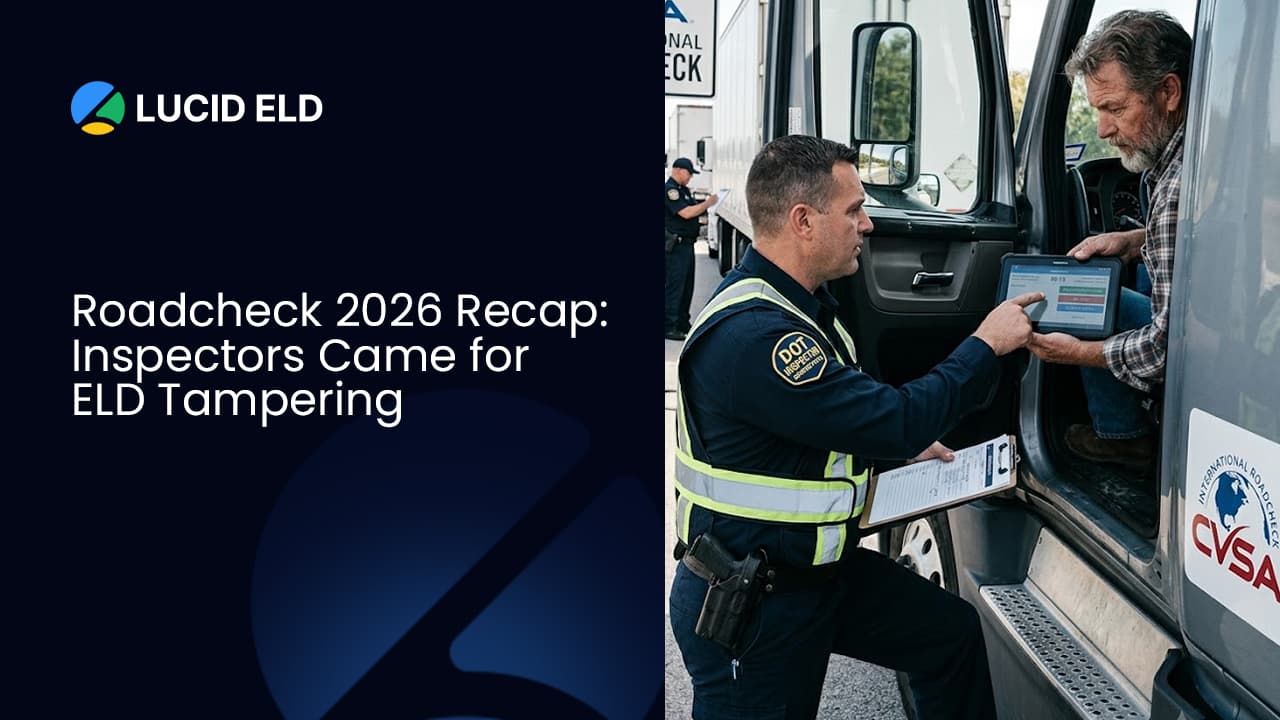
If the inspector's first contact suggests you may not understand instructions, they begin an English proficiency assessment as part of the inspection. It has two stages: first a conversation — expect questions about where you started, where you're headed, what you're hauling, and your hours — and then a highway traffic sign recognition check. During the assessment, no tools are allowed: no phone translator, no calling a dispatcher to interpret. Fail, and you're placed out of service immediately; the truck doesn't move until the carrier resolves the situation.
The one exception
FMCSA guidance clarified in early 2026 that drivers inspected inside U.S.–Mexico border commercial zones are cited for ELP violations but not placed out of service. Everywhere else in the country, out-of-service applies — regardless of what license you hold or where you're domiciled.
How to prepare (without panic)
The bar is reachable with focused practice, not years of study:
- Drill the inspection conversation. Practice answering, out loud: Where did you start today? Where are you going? What's your cargo? How many hours have you driven? Where are your logs?
- Learn the signs cold. Regulatory and warning signs — speed, weight limits, lane closures, hazmat restrictions — are a finite, learnable set.
- Master the compliance vocabulary. Our 12 essential terms glossary with Russian and Uzbek translations covers exactly the words inspectors use.
- Keep documents organized. A driver who hands over the right document before being asked twice faces fewer questions.
- Do a mock inspection. Have someone play officer for ten minutes a week. Confidence at a real inspection is built in rehearsal.
Our honest take
Thousands of excellent, safe drivers speak English as a second, third, or fourth language. This rule doesn't require them to become native speakers — it requires roadside functionality, and that's trainable. What doesn't work anymore is avoiding the issue. Build the fifteen minutes of practice into your week, and this becomes one more inspection item you're ready for.
Published July 2026. Based on FMCSA enforcement policy and CVSA out-of-service criteria in effect as of publication.
FAQ
Do I need perfect English to pass a DOT inspection?
No. The standard is functional: converse with the inspector about your trip and documents, and identify highway signs. Accent and imperfect grammar are not violations — inability to communicate is.
Can I use a translation app or interpreter during the assessment?
No. Once the English proficiency assessment begins, no tools or third parties may assist. Translation apps are fine for studying — not at the roadside.
Where does the border-zone exception apply?
Only in designated commercial zones along the U.S.–Mexico border, where drivers are cited but not placed out of service. Everywhere else, failure means an immediate out-of-service order.